Monday, 14 December 2015

NDM STORIES INDEX


NDM STORIES INDEX

  1. 17/09/2015: Social Media Is Harming The Mental Health Of Teenagers.
  2. 17/09/2015: Is It Safe To Turn Your Children Into YouTube Stars?
  3. 27/09/2015: It’s time the media treated Muslims fairly
  4. 27/09/2015: BBC apologises after suggesting partially deaf Tory MP had fallen asleep
  5. 1/10/15: Netflix Create The "Netflix & Chill Button"
  6. 1/10/15: UK mobile ad spend 'to overtake print and TV'
  7. 8/10/15: The Great British Bake Off final gets biggest TV audience of the year
  8. 8/10/15: Rupert Murdoch sorry for suggesting Obama isn't a ‘real black president’
  9. 16/10/15: Sun website traffic slips by 14%
  10. 16/10/15: Harrowing film recorded from inside the car reveals the last minutes of drug-drive friends who sped through the countryside at 90mph before crashing into a church and dying
  11. 06/11/15: Ofcom is not currently equipped to regulate BBC, says trust director
  12. 06/11/15: Call of Duty: Black Ops 3 campaign verdict – is Call of Duty devouring itself?
  13. 06/11/15 Facebook ads are about to get even more personal
  14. 06/11/15 Playing video games doesn’t make you a better person. But that’s not the point
  15. 06/11/15 Newspapers go on the hunt for a safe place to pay
  16. 06/11/15 Can dropping the paywall and upping the story count boost Sun’s website?
  17. 13/11/15 Sun website traffic recovers as Mirror slips back
  18. 13/11/15 Why the Daily Mirror pulled its exclusive story on The Voice
  19. 03/12/15 Is mobile making media all the same?
  20. 07/12/15 Daily News: The News Says He's A Terrorist, But So Are These Guys...
  21. 07/12/15 BBC3 TV channel to be switched off by February, BBC Trust confirms
  22. 11/12/15 Just how big is Apple?
  23. 11/12/15 Can broadcast TV match streaming’s big budget shows?
  24. 14/12/15 Thinking machines: the skilled jobs that could be taken over by robots
  25. 14/12/15 Why the Paris attacks got larger UK coverage than other tragedies
  26. 14/12/15 YouTube tipped to strike licensing deals for TV shows and films
  27. 14/12/15 Rise in UK web users blocking ads, research finds
  28. 14/12/15 BBC to confirm it will extend 10pm news by 10 minutes
  29. 14/12/15 What are Facebook and other social media doing about Donald Trump?
  30. 14/12/15 Facebook rolls out live streaming video service

Thinking machines: the skilled jobs that could be taken over by robots

Fear of mass unemployment has been proved wrong as automation makes the economy stronger

Machines cannot disrupt the world of art and music, where creativity flows direct from the soul, right? But if that is the case, then how did Tupac perform at the Coachella festival in 2012 – 16 years after his murder in Las Vegas? By way of a hologram, of course.
The rapper’s hologram was one of the most prominent examples of technology undercutting artists and performers, but it was by no means the first. Generative art, for instance, pushes the work of creation back a step. No longer are artists creating a specific music or painting: instead, they make a bot that can endlessly create, outproducing any human artist.
The notion of pilotless commercial airplanes would be horrific for most passengers and that is the main reason why we will not be seeing passenger-only excursions to Magaluf any time soon. But it is feasible. Any modern Airbus or Boeing aircraft can already be landed in thick fog without a pilot, while the advent of military drones underscores how pilotless flight has entered the geo-political mainstream. Will it enter the realm of commercial travel? Passengers, and of course regulators, are the main barrier.

Why the Paris attacks got larger UK coverage than other tragedies

Sundays

They have pointed to the fact that last Thursday, 44 people died in suicide bombings in Beirut. In August, 67 people were killed by a truck bomb in Sadr City in north-eastern Iraq. In April, 147 people, most of them students, were shot dead at Garissa University in north-eastern Kenya.
All of these horrific incidents were reported by the British media. But they didn’t get much more than a newspaper headline and a couple of minutes on TV and radio bulletins.
Although the downing of the Russian plane in Sinai, in which 224 people perished, got a reasonable show in papers and on TV, neither it nor the other tragedies received the wall-to-wall coverage granted to the Paris attacks.

YouTube tipped to strike licensing deals for TV shows and films

YouTube’s Robert Kyncl at the launch of the YouTube Red service


YouTube is preparing to strike deals with Hollywood studios and television firms to bring films and TV shows to its YouTube Red subscription service.
The online video service is keen for its $9.99-a-month service to compete more directly with rivals such as Netflix, Amazon and Hulu, according to the Wall Street Journal.Its report suggests that YouTube is in the “early stages” of these talks, but that it hopes to commission original shows and films rather than simply license existing content.

Rise in UK web users blocking ads, research finds

Popups

More than 1.3m people have adopted technology that blocks online ads since June, with young people more likely to turn off intrusive pop-ups and videos

Though the rise is modest, it suggests dissatisfaction with ads is growing, especially among the young, with 35% of 18- to 24-year-olds saying they blocked ads, compared to just 15% of over 55s.

Though most of the coverage of ad blocking has focused on mobile devices, few are blocking ads on their smartphones: 4.1% now compared to 2.9% in June. Just 23% of people using ad blockers do so on their smartphones, compared to 71% who say they block ads on a laptop.

BBC to confirm it will extend 10pm news by 10 minutes

Huw Edwards presents the BBC news: the 10pm bulletin will be extended from the new year

The BBC is to extend its 10pm news programme by 10 minutes, beginning in January, in a move which will increase regional and national news in its flagship bulletin.
The longer bulletin, which will run from Monday to Thursday, comes after a five-month trial in the run-up to the general election which proved popular with viewers, according to the BBC.
“Through research, our audience has told us that they want more from our evening news service. The format we first tried before the election allows audiences to see more regional stories and gives us the opportunity to get under the skin of the issues alongside content that reflects arts and culture in different parts of the UK.”
This hsows how social media and online news has not only created a decline in newspapers but also starting to kill TV news broadcasts.

What are Facebook and other social media doing about Donald Trump?

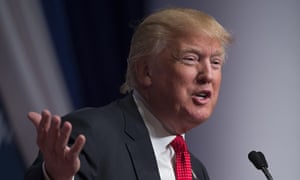
Donald Trump

The US woke up on Friday to the news that Donald Trump was a full 20 percentage points ahead of Ted Cruz, his nearest rival, for the Republican nomination, and a good 16 percentage points higher than America’s top political analysts thought he would be.


Running on a platform of “making America great again”, his campaign has been noteworthy for Trump’s egregious widespread insults and total fabrications, on a gargantuan scale. The most recent of which was him claiming to have seen “thousands of Muslims” dancing in the streets of New Jersey after 9/11. No evidence exists of this, because it never happened.

Donald Trump has so far spent a mere $217,000 on broadcast advertising, compared to the eye-watering $28.9m spent by Jeb Bush, currently languishing at 3% of the poll compared with Trump’s 36%. Trump is allowing the evolved ecology of TV coverage and the new power of the social web do the work for him, live tweeting along the way.

When it is possible to remove all traces of a campaign claim which is completely untrue, and demonstrably so, by building verifiability into the algorithm, will social platforms and search engines go ahead and do it? 

What he meant was, should reporters report something even if they know it to be false?