Friday, 11 December 2015

Can broadcast TV match streaming’s big budget shows?

Filming of 'The Crown'
Netflix and Amazon can focus on blockbusters but others have schedules to fill.

“We have to provide something that is not normal telly – something that is going to surprise and delight our customers, and very often it’s different because it’s bigger,” says Chris Bird, film and TV strategy director for Amazon Video UK.

This article shows how new and digital media such as netflix and TV streaming has taken over TV as a whole. This is because they are making their own TV shows, which are different and unique. This is due to the high budgets they are spending on these TV shows, something broadcast tv isn't doing. This means that more and more TV viewers may be switching to Tv streaming as they are able to get exclusive, brand new TV shows that are actually very good. Good examples would be Narcos, House Of Cards & Better Call Saul.

Just how big is Apple?


How much cash has Apple got?

It had $194bn in cash reserves as of March 2015

How many iPhones does it sell?

It sold 47.5 million iPhones in the three months to June 27, 2015

What about iPads?

It sold 10.9 million iPads in the same period, down 18pc on the year before

How important is China to Apple?

Apple sales were worth $13.23bn in China in the second quarter of 2014-5

Does it still sell Macs?

Indeed, it does: 4.6 million of them in Q2 2015

Apple sales breakdown:

70%: iPhone

10%: Macs

9% iPad

9% services (such as iTunes)

2%: other products (iPod, Watch)


This table shows just how much people are continuing to grow into the new and digital era. Smartphones are now becoming a norm, this means loads more people are likely to become users of social media. Also, it shows how strong globalisation is, Apple sell so many iPhone that it is one of the leading smartphones on the market, if everyone has one it limits peoples choices down.

Thursday, 10 December 2015

NDM case study: News on the Tweet

Why are respected news brands good news for Twitter?
Respected news brands are good news for twitter as many people search for breaking news via twitter, so if they wanted to find out about genuine, real news, trusted news brands like the BBC will only publish verified stories.

Why in turn is Twitter good for respected news brands?
As twitter connects everyone together, it allows for followers of these news brands to interact with institutions and allows intuitions to interact with their followers. It also allows for much more web hits as twitter only allows for 140 characters, meaning if users are intrigued in a story, they will have to click on the full article.

The report suggests that old and new media “are not, in fact, in direct competition, but often work extremely well together to enhance both the media eco-system and the consumer experience”. What evidence do they provide to support this idea? Do you agree with it?
The report says that newsbrand followers believe that twitter has allowed them to interact with news brands like never before, this means that twitter and the internet has helped traditional news as followers are more likely to read stories they may not have read in print, online.

On page 24/25 of the report, the focus turns to 'gossip' or 'banter'. What example tweets from journalists are used to illustrate this? 
Do you think the increasing amount of 'gossip' or 'banter' is harming the reputation of news and journalists?
This section adds some comedy and entertainment for news, it shows how news is evolving and adapting to new and digital media. They are aiming to get as much readers as possible, so by adding this section of tweets, it can bring a new audience. 

What does the report say about trust in Twitter and journalists (look at pages 34-39)?
62% of twitter users voted that news brands are the most trusted accounts when looking for news, they may not believe what other people have posted. Also, 69% of people voted that twitter has allowed viewers to interact with journalists like never before.

Finally, do you think new and digital media developments such as Twitter have had a positive or negative impact on traditional newspapers?
I think that twitter has still given a negative affect on traditional newspapers, this is because everyone has switched to new and digital media and traditional newspapers aren't making as much revenue.

Monday, 7 December 2015

BBC3 TV channel to be switched off by February, BBC Trust confirms

Image result for bbc three
Corporation’s governing body rubber-stamps decision to move youth-oriented channel on line, but calls for more youth programming on BBC1 and BBC2

This article discusses how a popular youth channel, BBC Three is being shutdown and transformed to an online only show. The channel aired programmes like; Dont Tell The Bride, Family Guy, Top Gear, American Dad etc. This bites into new and digital media as the youth may not have time to watch TV any more, they are more likely to spend they're free time online, socialising with friends. Also, a high number of youth tend to watch theyre TV on their laptops, phones and tablets due to services like catch up TV and Netflix, therefore BBC three moving on-line could be a good move. This shows how large institutions are evolving to changes by new and digital media.

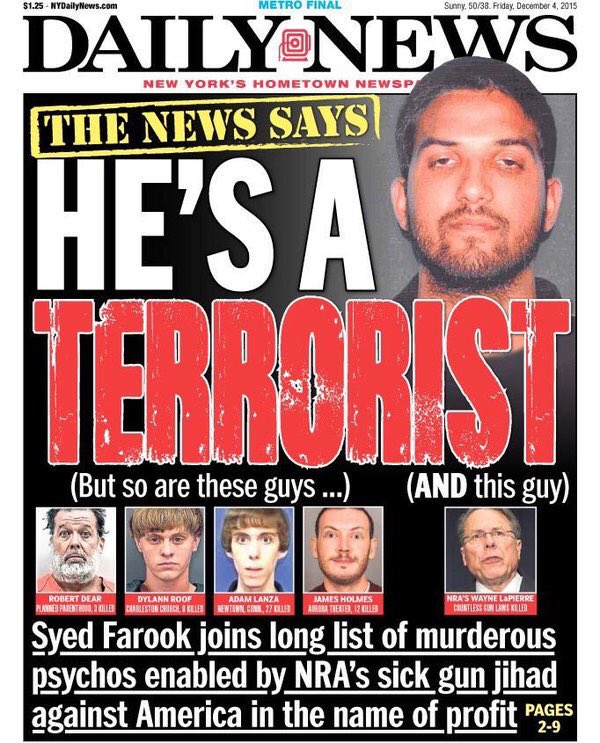
Daily News: The News Says He's A Terrorist, But So Are These Guys...

Embedded image permalink

This front cover is important as its one of the first to give in to the amount of propaganda the news industry offers, it takes a different approach that other news outlets do as they put the word terrorist and Islam together with ease, but when someone that isn't Muslim or even Asian / middle eastern, they somehow suffer from mental health. News institutions are the ones that created islamophobia and have played a major role in getting people to believe in this. This article provided by the Daily News finally takes a different approach, this proves how the affect of cyber protesting on-line can change the way in which news create news, hopefully other will change.

MM47: Google Glass

1) Why was Google Glass controversial?
As moral panics started stirring up as the feature of being able to record what you see and share live instantly can allow for people to record other people without permission and in a way where people may not even know that they're being recorded. This can cause a problem with privacy and personal space. Secondly, it is possible that google may be able to see what we see, for example they could analyse what we look for in a supermarket & what we dont, then sending a bunch of marketing towards us.
2) What are the positive elements to Globalisation that the article highlights?
That google are able to connect people online & are growing to get more and more people access to the internet. Google? In a sense the world becomes more accessible, and people are enriched by getting to know and understand it better. Increased choice and opportunities empower people, while access to information can enhance not only the ability to make informed decisions but even the democratic process.

3) What are potential negatives to Globalisation?
Smaller companies have little, or no hope of making an impact on in the market as they wont be able to compete. This means that are choice is very limited by a limited number of companies who dominate the global market, and, in the main, only distribute the majority of the world’s wealth amongst themselves. Google is 15 featured on the FT500 list, eight out of the top ten of these are American owned.

4) What is a techno-panic? How does it link to moral panics?
A techno-panic is therefore a moral panic that centres on fears regarding specific contemporary technology or technological activity. Questions are forming that ask whether Google glass will begin to make people less engaged in conversations. This is because people may not know whether someone wearing glass will be paying attention to what is going on around them, it could be like trying to  talk to someone with headphones in.

5) What is your opinion on the privacy debate and major corporations being able to access large quantities of personal data?
I think that as corporations like Google still continue to grow and grow, it makes it a lot easier for us to grow our carbon footprint. This means that Google is more able to access our data and personal information, and in most cases, we never check long pages of terms and conditions so we may never know what Google do with this information. They can easily find out what we search, shop for, upload, email and even where we are going because of Google maps. In some cases, it may just be a moral panic due to conspiracy theories, but i guess we'll never know.

Thursday, 3 December 2015

Is mobile making media all the same?

News content has beome increasingly aimed at mobile, especially Facebook

"As phones grow to become an overwhelming majority of traffic, content has become increasingly aimed at playing the numbers game"

The internet was meant to be an amazing engine for invention and diversification in media. With the barriers to entry toppling, anybody could become a publisher, and, thanks to the blog revolution, thousands of people did. In the mid-2000s, especially, the dream of web-based nanopublishing was alive and well: if “freedom of the press is guaranteed only to those who own one,” as AJ Liebling famously said, then suddenly hundreds of millions of people had a printing press at their fingertips. Arianna Huffington, and her investors, made a small fortune from aggregating what those people had to say: “self expression is the new entertainment,” she said, and she wasn’t wrong. And then came smartphones.